The Stack Got Crowded: Why Single-Tool Subscriptions Don’t Scale
Five years ago, a creative or marketing team could pick a “best” AI tool and run. One image model, one voice model, maybe a video beta, and you were covered. That world vanished. The frontier now moves by modality and niche: typography-perfect image models, long-form video models with better motion physics, voice models tuned for conversational timing, music models that actually groove. No single vendor excels across that spread. The result for most teams has been subscription sprawl: half a dozen logins, unpredictable costs, and brittle workflows that break when one tool changes policy or gets rate-limited.
Sprawl isn’t just annoying. It’s expensive, hard to govern, and slow:
- Seat sprawl and underutilization: Paying for five seats in a tool that three people touch each quarter is dead cost.
- Procurement overhead: Security reviews, renewals, and separate invoices for each point solution pile up into real admin time.
- Context shifting: Teams bounce between UIs and file systems, flattening productivity and fragmenting brand assets.
- Inconsistent rights and moderation: Each vendor enforces policy differently; legal and brand teams can’t audit end to end.
- Single-vendor fragility: A policy tweak or outage halts a campaign when you’re chained to one model.
That’s why multi-model platforms are replacing single-tool subscriptions. They let you pick the right model for each job, align costs to quality targets, and keep one operational surface for governance. Nexvy, for example, unifies over 30 models across images (FLUX, Nano Banana, Midjourney, GPT Image 2, Ideogram, Seedream), video (Veo 3, Kling, Sora 2, Seedance, Hailuo), audio (ElevenLabs, GPT-4o Audio) and music (Suno, Lyria) so teams can route work to the best option without juggling products.
Model Diversity Isn’t a Luxury — It’s the New Baseline
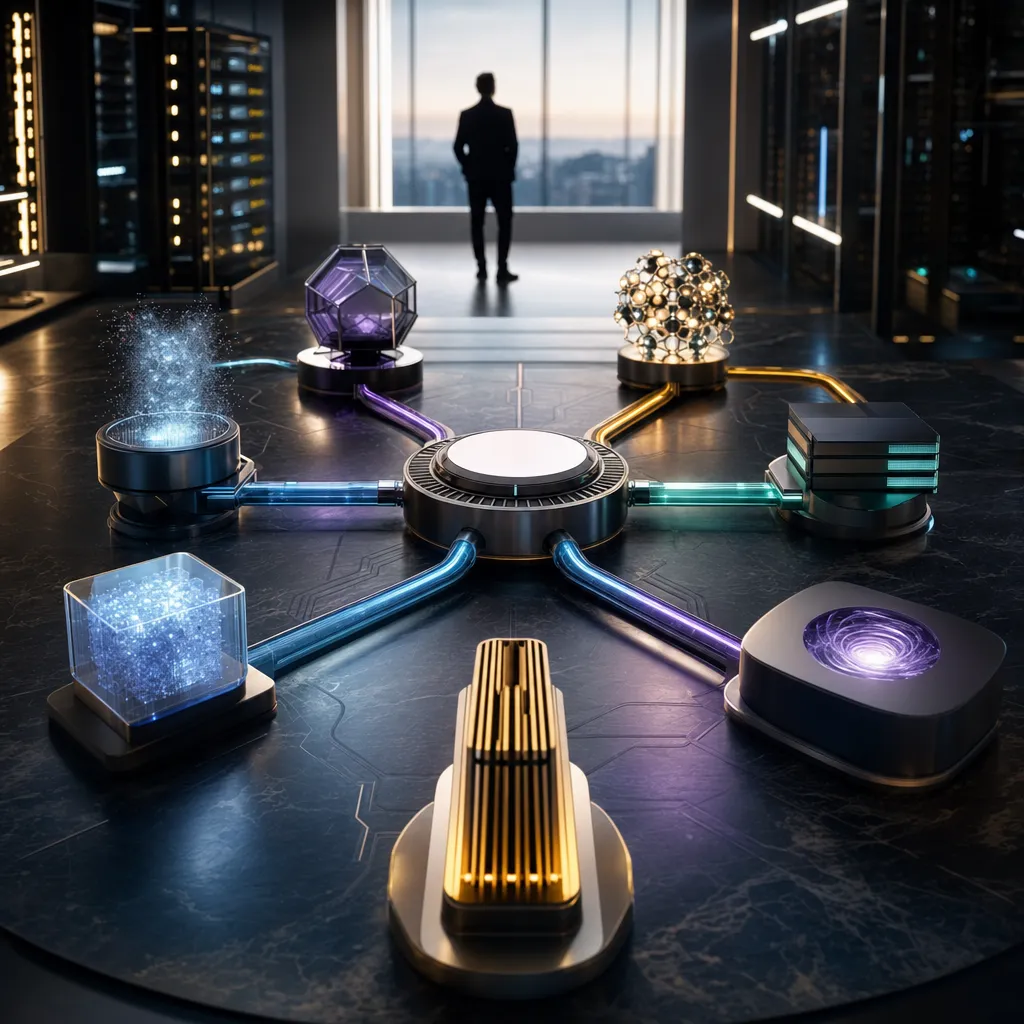
The more precise your brief, the more obvious it becomes: one “generalist” model rarely wins across tasks. Concrete examples make this clear.
Images: typography, style, and photorealism pull in different directions
- Ideogram is widely regarded for text rendering inside images (brand names, posters, packaging) where many models wobble. If your artboard lives or dies by “clean lettering,” Ideogram belongs in the stack.
- Midjourney produces strong art direction out of the box and has a “house style” many brands find usable for moodboards and concepting. It’s subscription-based with Fast/Relax GPU time rather than pay-per-image credits, which affects how teams plan bulk work.
- FLUX (e.g., FLUX.1) offers open-weight flexibility and freedom for teams who want to host or tune. Great for workflows that need repeatability and control.
- GPT Image 2 is handy for integrated prompt-to-comp asset creation when you’re already using OpenAI for copy or planning flows.
- Nano Banana and Seedream tend to excel at highly stylized looks and certain character aesthetics, useful when a campaign leans into anime or illustrative directions.
No single one of these is “best.” A footwear drop might need Ideogram for the typography-led billboard, FLUX for texture-forward in-store art, and Midjourney for fast concept iterations.
Video: motion coherence vs. cinematic intent
- Kling (Kuaishou) has shown strong motion realism and temporal stability, especially in scenes with physics-heavy elements like cloth or water.
- Veo 3 emphasizes cinematic language in prompts, making it easier to describe shots the way a director would.
- Sora 2 is an exemplar of long-horizon scene consistency—useful when story threads and object permanence matter.
- Seedance and Hailuo add stylistic range and emerging capabilities that are valuable during exploration.
Again, the “winner” depends on the brief. A skateboard launch film with fast cuts and lively motion might favor Kling for anchor shots, while a manifesto film with moody dolly moves may read better with Veo 3.
Audio and music: format and feel dictate the model
- ElevenLabs is strong for expressive text-to-speech with voice cloning options; pricing is typically character-based, which maps well to scripts and voiceover budgeting.
- GPT-4o Audio suits conversational agents and interactive content where prosody and latency matter.
- Suno renders full songs from prompts, often via credits per track, a useful knob for controlling experimentation versus finals.
- Lyria is oriented toward music generation with control over stylistic guidance, helpful for consistent sonic branding.
Brand tone may nudge you to ElevenLabs for a compassionate narrator and to Suno or Lyria for stems that fit a 15-second cutdown. You wouldn’t lock into one tool and call it done.
How Unified Platforms Change Unit Economics
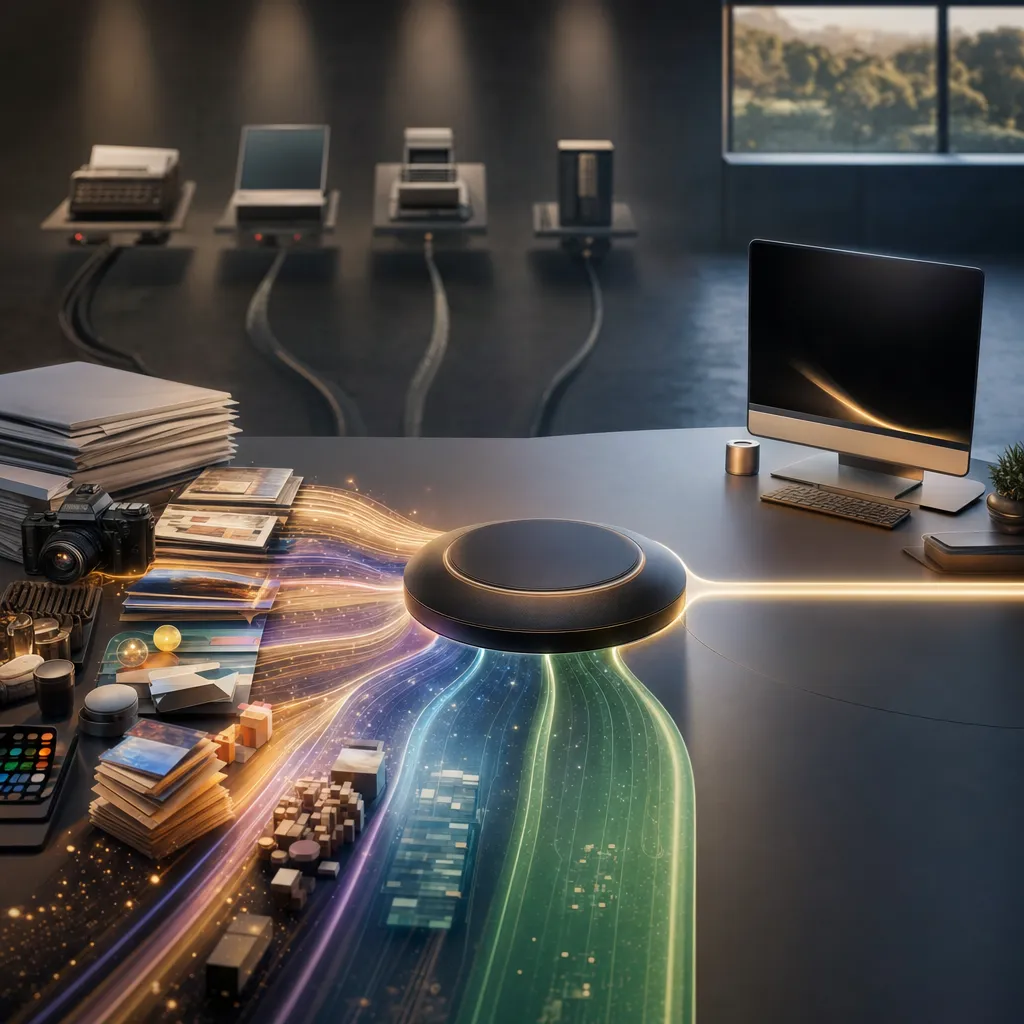
Most teams don’t overspend because any single task is costly. They overspend because the stack is fragmented. A unifying layer changes that math in three ways.
One credit pool, multiple models
Multi-model platforms convert scattered vendor plans into a single pool of credits or metered usage. Instead of underused seats and extra GPU minutes trapped in a walled garden, your team deploys the same pool across image, video, audio, and music. That collapses idle spend and lets you shift budget toward content that ships.
Nexvy takes this approach and exposes per-model pricing inside one console, so a designer can spend conservatively on explorations and then “upgrade” only the final variations to premium models or higher resolutions. Draft in a fast, efficient model; lock the hero shot in a premium model when it matters.
Right-model routing beats one-size-fits-all
The cheapest route isn’t just “use the lowest-cost model.” It’s “use the lowest-cost model that meets the quality bar for the task.” Some patterns that consistently save time and money:
- Typography-first posters: Start in Ideogram for accurate lettering, then pass to FLUX for textures and lighting. You avoid costly retouches because the letters are right from frame one.
- Style scouting vs. final renders: Explore looks in a fast model (e.g., FLUX or a lighter pipeline), then re-run chosen prompts in Midjourney to benefit from its distinctive aesthetics for final comps.
- Video anchor shots, not every shot: Use Kling or Sora 2 for key moments where motion realism and temporal stability matter; fill connective tissue with Veo 3 for shot variety and speed.
- VO scratch vs. final read: Generate scratch audio with GPT-4o Audio for rapid timing checks; record finals in ElevenLabs for vocal nuance and consistency.
- Music sketches vs. deliverables: Iterate ideas with Suno credits on short loops; commit final 30- and 60-second cuts once the picture is locked.
These patterns swap “monolithic” runs for targeted use. The cumulative impact is substantial even without changing total output volume.
Benchmarking and A/B without switching platforms
Quality is subjective until you measure it. A unified platform lets you A/B prompts across multiple models with the same seed, aspect ratio, and safety parameters. You’ll see which model nails product textures, which introduces fewer artifacts in text, and which handles difficult motion. Once you know the strengths, you can codify routing rules: “If prompt contains typography → Ideogram; if ‘long exposure’ or ‘volumetric fog’ → FLUX; if ‘90s magazine art direction’ → Midjourney,” and so on. This is practically impossible to maintain across scattered tools and exports.
Reliability, Governance, and Risk Are Better in Aggregation

Operational resilience matters when AI sits in a production pipeline. Platforms that aggregate multiple providers offer guardrails you can’t get when you’re parked on a single vendor.
- Outage and policy insulation: If a model throttles, changes its content policy, or sunsets a feature, you can redirect prompts to an alternate model with similar capabilities. Campaigns don’t stall.
- Unified moderation and audit: Consistent safety filters, prompt logs, and asset lineage across models simplify compliance reviews and brand QA. Legal can trace source prompt → model → version → output.
- Version pinning: You decide when to advance from “vNext” to maintain visual continuity across a campaign or episode run.
- Role-based access and quotas: Cap experimentation where needed, open the throttle for production teams, and keep finance happy with predictable ceilings.
- Data boundaries: Centralized controls reduce accidental data exposure across many vendor accounts and reduce the surface area for security review.
This is where Nexvy’s structure helps: one workspace, consistent governance, and routing across 30+ models. Creative leads keep flexibility; operations keep control.
Practical Workflows That Prove The Point
1) Social drop for a new product line
- Concept tiles: Generate 12–20 style frames with FLUX to explore lighting and surfaces quickly.
- Typography-led hero: Move the top three prompts to Ideogram to embed product naming and taglines directly into poster-style images without warped letters.
- Final finesse: Re-run the selected hero in Midjourney to get richer art direction and variants sized for portrait, square, and story formats.
- Motion snippets: Build 5–10 second motion loops in Veo 3 for background movement; if one shot needs stronger physics (flowing fabric, splash), switch that shot to Kling.
- Voice and music: Draft VO timing with GPT-4o Audio; render the final read in ElevenLabs. Sketch tracks in Suno, then commit the final 15-second sting.
Economically, most iterations happened in efficient models with lower credit or time costs, reserving premium capacity for final selects. You paid for quality only where audiences notice it.
2) Launch video with product-in-scene realism
- Storyboard generation: Start with GPT Image 2 to spitball shot ideas alongside copy, then polish key frames in FLUX for material realism.
- Anchor shots: Produce two hero sequences in Sora 2 to maintain object permanence and long-horizon coherence.
- Intercut scenes: Use Kling to add kinetic B-roll with believable motion blur and camera drift for energy.
- Sound design: Create a subtle underscore in Lyria and layer a short Suno motif for the logo lockup.
- Final VO: ElevenLabs for a natural, brand-aligned voice print with controlled pacing.
The stack flexes around the content. No need to replace your entire toolset because one shot requires better physics; you route the exception, not the project.
3) Typography-first OOH poster series
- Lettering correctness: Ship prompts to Ideogram first to lock clean, on-brand text in-frame.
- Texture pass: Feed the selected result to FLUX to add grain, film halation, and surface wear while preserving lettering integrity.
- Style exploration: Push two–three finalists into Midjourney for stylized art direction variants that feel editorial.
Trying to force any single image model through all three phases typically leads to either compromised typography or extra editing. Splitting the work by model specialty shortens the path to print-ready art.
What To Look For In a Multi-Model Platform
Not all aggregators are equal. When you evaluate, look for control and clarity rather than a flashy model list.
- Transparent per-model pricing and quotas: You should see expected credits or metered costs before you run, and cap usage by team or project.
- Routing controls and presets: Map prompt patterns to default models; let power users override when needed.
- Version pinning and changelogs: Keep continuity across campaigns; move forward intentionally.
- Prompt, seed, and parameter portability: Re-run the same idea across models without rewriting everything from scratch.
- Consistent safety settings and auditing: Apply the same moderation posture everywhere, with traceable logs.
- Batching and API-first design: Trigger large runs, webhooks for completions, and integrate with DAM/PM tools.
- BYO keys or private models: For teams with their own agreements or tuned checkpoints, you should be able to bring them into the same control plane.
Nexvy ticks those boxes with a single workspace for images, video, audio, and music—routing across models like Midjourney, FLUX, GPT Image 2, Ideogram, Veo 3, Kling, Sora 2, ElevenLabs, Suno, Lyria, Seedream, Seedance, and Hailuo—accessible through a clean UI and an API. The result is fewer spreadsheets, fewer renewals, and less “which tool do I open?” confusion.
The Bottom Line: Portfolios Beat Single Bets
Creative and content operations now live in a multi-modal reality. Each task rewards a different strength: text fidelity, motion stability, cinematic intent, voice nuance, or musical feel. Betting on a single vendor turns into a tax on quality or velocity, and a liability when policies or performance shift. A unified, multi-model platform replaces that tax with choice, cost control, and resilience—so teams can concentrate on stories, not software.
If your stack already feels crowded, try centralizing it. Start with a small pilot: define a few routing rules, draft in efficient models, reserve premium capacity for finals, and measure the delta in rework and spend. Platforms like Nexvy make that pilot simple because the models you want are already under one roof. See what a portfolio can do when it’s coordinated instead of improvised—and decide if it’s time to retire your single-tool subscription habit.