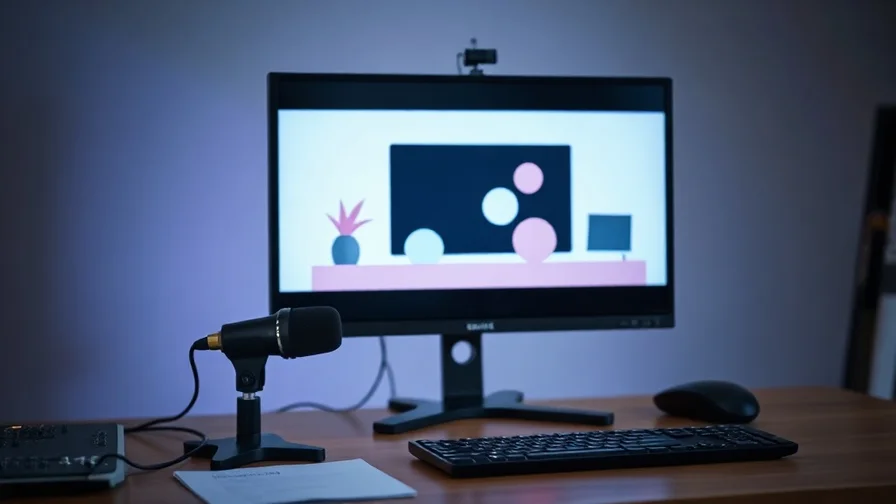
An explainer video — the 60–90 second piece that makes someone get your product or idea — used to need a scriptwriter, a voice actor, a motion designer and a studio. In 2026 one person produces it with AI. Here's the step-by-step.
Step 1 — Write a tight script
Explainers win on clarity. Use the classic structure and keep it to 60–90 seconds:
- Problem — the pain in one or two lines.
- Solution — what your thing does.
- How it works — three simple steps.
- CTA — one clear next action.
One idea per sentence; write for the ear. An LLM drafts it, you tighten it ruthlessly — every extra line costs comprehension.
Step 2 — Narrate with AI voice
Turn the script into clean narration with ElevenLabs. Pick a clear, friendly voice and keep it consistent. Generating line by line means you can fix a single sentence later without re-recording — handy when the product changes. See our ElevenLabs TTS guide.
Step 3 — Build the visuals
Time visuals to the narration, one idea per shot:
- Diagrams, UI mockups, slide art — generate with Nano Banana (edits) and Ideogram (labelled text, readable UI). See best AI image editing tools.
- Motion and scenes — Veo for cinematic shots, Kling/Seedance to animate a still or show a scenario. The cinematic prompt guide helps.
The rule that makes explainers feel professional: the visual on screen must match the exact line being narrated.
Step 4 — Add a music bed
A subtle instrumental bed lifts an explainer. Generate one with Lyria (loopable) or Suno, and keep it low so the narration leads. Add a light SFX "ding" on key reveals if it fits.
Step 5 — Caption and export
Add captions (many watch muted, especially on social and landing pages), confirm the pacing matches the narration, and export 16:9 for a site/YouTube or 9:16 for social. Drop it on your landing page above the fold — explainers convert there.
Common mistakes
- Too long. Past ~90 seconds, comprehension drops. Cut.
- Visual/narration mismatch. Generate visuals to the script, beat by beat.
- Burying the CTA. One clear action at the end.
- Robotic VO. Re-roll lines; pick a natural, friendly voice.
The all-in-one angle
An explainer spans script, voice, video, diagrams and music — five layers. Producing each in a different tool is slow for something you'll iterate on as the product evolves. Nexvy runs ElevenLabs narration, Veo/Kling/Seedance video, image models for diagrams and Suno/Lyria music under one subscription, so you go script-to-export from one account and one credit balance. See the video generator or pricing.
Frequently asked questions
How do you make an explainer video with AI?
Write a tight script, narrate it with AI voice (ElevenLabs), generate the visuals with AI video and images timed to the narration, add a light music bed, then caption and export. No studio or motion designer needed — every layer is AI-produced and assembled in any editor.
What's the ideal length for an explainer video?
Usually 60–90 seconds. Explainers live or die on clarity and pace: one idea per shot, a clear problem-solution-CTA structure, and visuals that match each line. Keep it short — the goal is comprehension, not runtime.
Do I need a designer to make an explainer video?
Not anymore. AI image models generate diagrams, UI mockups and slide visuals, and AI video generates the motion — so a founder or marketer can produce a professional explainer without a motion designer or studio.
Where can I make an explainer video end to end?
Nexvy runs ElevenLabs narration, Veo/Kling/Seedance video, image models for diagrams and Suno/Lyria music under one subscription — so script-to-export happens in one account and one credit balance.
The bottom line
An AI explainer is a five-step pipeline — script, narration, visuals, music, captions — that one person ships in 2026. Keep it under 90 seconds, match every visual to the narration, end on one clear CTA. Make your explainer on Nexvy, script to export in one place.