The AI landscape is evolving at breakneck speed, and 2026 is shaping up to be a key year for artificial intelligence. As we stand at the intersection of technological breakthroughs and practical implementation, the trends emerging now will fundamentally reshape how we work, create, and interact with AI systems.
For content creators, marketers, and business leaders, understanding these shifts isn't just helpful—it's essential for staying competitive. Let's dive into the ten most significant AI trends that are already beginning to reshape our digital world.
1. Model Convergence: The End of Specialized AI Tools
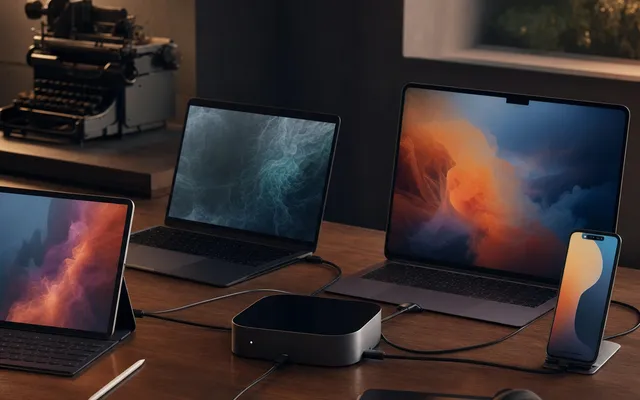
Gone are the days when you needed separate tools for writing, image generation, and data analysis. 2026 marks the era of unified AI models that seamlessly handle multiple content types within a single interface.
This convergence means you can now ask an AI to write a blog post, generate supporting visuals, and create a social media campaign—all in one conversation. The boundaries between text, image, video, and audio generation are dissolving rapidly.
For creative teams, this represents a massive efficiency gain. Instead of juggling multiple platforms and maintaining separate workflows, everything happens in one place with consistent quality and style.
2. Multimodal Generation Becomes the Standard
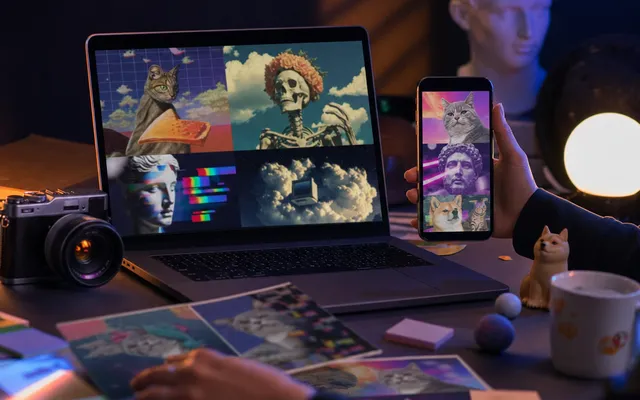
While model convergence brings tools together, multimodal generation reshapes how AI creates content. We're witnessing AI systems that don't just understand text prompts—they process images, audio, video, and even real-time data streams to generate sophisticated outputs.
Imagine describing a product launch campaign and having AI generate not just the copy, but also the visual mockups, video scripts, and even background music that matches your brand voice. This isn't science fiction—it's happening right now.
The practical implications are enormous. Marketing teams can produce complete campaigns in hours rather than weeks, while maintaining creative control over every element.
Create a product announcement for our new sustainable water bottle. Include:
- A press release highlighting eco-friendly materials
- Social media posts for Instagram and LinkedIn
- A product description for our website
- Suggested hashtags and campaign messaging
Make sure the tone is inspiring but not preachy, targeting environmentally conscious millennials.
3. Agentic Workflows Reshape Content Production
Perhaps the most exciting development is the rise of agentic AI—systems that can plan, execute, and refine complex workflows autonomously. These aren't just chatbots that respond to prompts; they're digital assistants that understand goals and figure out how to achieve them.
In content creation, this means AI agents can manage entire projects. They'll research your topic, outline the structure, create the content, fact-check information, and even suggest distribution strategies—all while keeping you in the loop for approval and guidance.
This shift from reactive to proactive AI fundamentally changes the creator-AI relationship. Instead of giving detailed instructions for each step, you provide the destination and let the AI handle the journey.
4. Dramatic Cost Reductions Make AI Universally Accessible
One of the most democratizing trends of 2026 is the dramatic reduction in AI costs. What used to require enterprise-level budgets is now accessible to freelancers, small businesses, and individual creators.
This cost revolution stems from improvements in model efficiency, better hardware utilization, and increased competition among AI providers. The result? High-quality AI generation that costs pennies rather than dollars per request.
For creative professionals, this opens up entirely new possibilities. Rapid prototyping, A/B testing multiple content variations, and exploring creative directions all become financially viable for projects of any size.
5. Context Windows Expand to Handle Entire Projects
Remember when AI could only remember the last few messages in a conversation? Those days are rapidly fading. Modern AI systems can now maintain context across thousands of pages of content, remembering project details, brand guidelines, and stylistic preferences throughout extended collaborations.
This expanded memory reshapes AI from a tool for individual tasks into a true creative partner. The AI remembers your brand voice from Monday's project when you're working on Friday's campaign, ensuring consistency without constant reminders.
Long-form content creation becomes seamless when AI can hold an entire book, report, or campaign in its working memory while crafting each individual piece.
6. Real-Time Collaboration Between Humans and AI
The traditional model of prompting AI and waiting for results is giving way to real-time collaboration. Modern platforms enable fluid, conversational workflows where humans and AI build content together, making adjustments and refinements on the fly.
This collaborative approach feels more like working with a very skilled colleague than operating a tool. You can brainstorm ideas, explore alternatives, and refine concepts in a natural, iterative process.
Creative teams are discovering that this real-time partnership often produces better results than either human-only or AI-only approaches. The combination uses human creativity and intuition with AI's speed and analytical capabilities.
Let's brainstorm 10 unique blog post angles for "remote work productivity."
For each angle, I want you to:
1. Suggest a compelling headline
2. Outline 3-4 main points
3. Identify the target audience
4. Note what makes this angle different from typical productivity advice

Start with the first three, and I'll give feedback before we continue.
7. Personalization Reaches Unprecedented Levels
AI personalization in 2026 goes far beyond inserting someone's name into an email. Modern systems can adapt writing style, complexity level, cultural references, and even humor to match specific audiences or individuals.
This granular personalization extends to every aspect of content creation. The same core message can be automatically adapted for different platforms, demographics, or even individual recipients while maintaining authenticity and relevance.
For marketers, this means creating truly targeted content at scale. Instead of broad demographic segments, you can craft messages that resonate with specific personas, interests, and communication preferences.
The technology behind this personalization is becoming increasingly sophisticated, analyzing everything from word choice patterns to emotional tone preferences to create content that feels naturally tailored.
8. Quality Control Becomes Automated and Intelligent
One of the biggest challenges in AI content generation has been ensuring consistent quality and accuracy. 2026 brings advanced quality control systems that can fact-check, verify sources, and maintain brand consistency automatically.
These systems don't just catch obvious errors—they understand context, verify claims against reliable sources, and ensure content aligns with brand guidelines and ethical standards.
For content teams, this automated quality control provides confidence to scale content production without sacrificing accuracy or brand integrity. The AI becomes both creator and editor, handling multiple rounds of refinement before human review.
Generate a data-driven article about renewable energy adoption trends. Include:
- Statistics from the last 3 years
- At least 3 credible sources cited properly
- Charts or data visualizations described in detail
- A balanced perspective including both progress and challenges
- Fact-check all claims and flag any uncertain information for my review
9. Industry-Specific AI Models Deliver Domain Expertise
While general-purpose AI models are incredibly powerful, 2026 sees the rise of specialized models trained on industry-specific knowledge and terminology. These models understand the nuances, regulations, and best practices unique to fields like healthcare, finance, legal services, and technical writing.
For professionals in specialized fields, this means AI that truly understands your domain. Legal AI that knows case law, medical AI that understands clinical terminology, or technical AI that can write accurate documentation for complex software systems.
Platforms like Nexvy are increasingly offering these specialized capabilities, allowing users to switch between different expert models depending on their project requirements.
10. Ethical AI and Transparency Become Standard Features
As AI becomes more powerful and ubiquitous, 2026 marks a turning point in ethical AI implementation. Transparency features that show how content was generated, bias detection systems, and ethical guidelines are becoming standard rather than optional.
Users can now see the reasoning behind AI decisions, understand what training data influenced outputs, and receive alerts when content might contain biases or problematic elements.
This transparency doesn't slow down the creative process—instead, it builds trust and enables more confident use of AI across sensitive applications like public communications, educational content, and brand messaging.
Create a diversity and inclusion policy for a tech startup. Ensure:
- Language is inclusive and accessible
- Legal compliance considerations are noted
- Examples are diverse and representative
- Check for unconscious bias in word choice and examples
- Provide transparency notes on sources and reasoning used
What This Means for Creative Teams
These trends collectively point to a fundamental shift in how creative work gets done. AI is evolving from a tool that requires careful management to a capable partner that understands goals and helps achieve them efficiently.
The most successful creative teams in 2026 are those that embrace this partnership model. They're not trying to replace human creativity with AI, but rather amplifying their capabilities through intelligent collaboration.
This evolution requires new skills—not technical programming, but the ability to communicate goals effectively, provide strategic direction, and maintain creative vision while letting AI handle execution details.
Looking Ahead: Preparing for the AI-First Creative World
The trends shaping 2026 are just the beginning. As these technologies mature, we'll see even more sophisticated forms of human-AI collaboration, deeper personalization capabilities, and new creative possibilities we haven't yet imagined.
The key to thriving in this environment is starting now. Experiment with current AI tools, develop workflows that incorporate AI assistance, and build comfort with collaborative content creation.
Help me create a 6-month content strategy for adapting our marketing team to AI tools. Include:
- Monthly learning objectives
- Specific AI tools to experiment with
- Workflow changes to implement gradually
- Success metrics to track our progress
- Training resources for team members with different comfort levels
Ready to Experience the Future of Content Creation?
These AI trends aren't distant possibilities—they're available today on platforms like Nexvy. To simplify your content workflow, explore new creative directions, or simply stay ahead of the curve, now is the perfect time to start experimenting with AI-powered content generation.
The future of creative work is collaborative, intelligent, and more exciting than ever. Try Nexvy today and discover how these trends can reshape your content creation process right now.